Posted on 19 May 2026
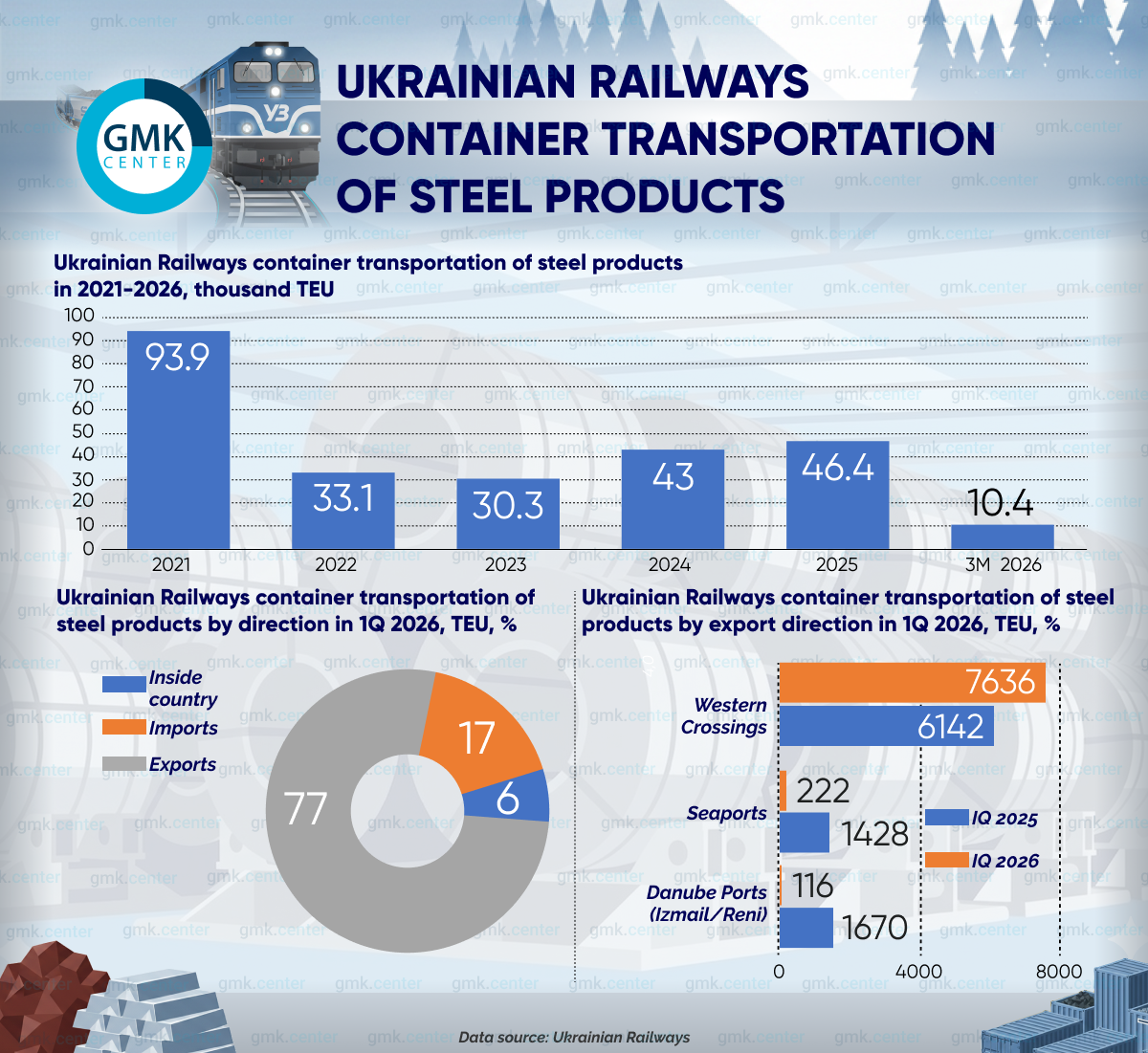
Since 2022, the volume of ferrous metal container shipments by Ukrainian Railways (UZ) has increased by 40%—from 33,100 to 46,400 TEU in 2025. However, this is significantly below the pre-war level of 93,900 TEU in 2021.
The figure for the first quarter of 2026 is 10.4 thousand TEU, which is only 3% less than in the same period last year. In 2025, the transportation of steel products by this method increased by 7.8% year-over-year, to 46,400 TEU, although by the end of 2024 this figure had decreased by 42.3% year-over-year, to 43,000 TEU.
In the structure of Ukrainian Railways’ container traffic, ferrous metals accounted for 15% (300,000 tons) in the first quarter, which is 1 percentage point higher compared to 2025 (14%). Overall, shippers and recipients of steel products are Ukrainian Railways’ largest clients in terms of container transport volume, following agricultural producers.
Exports accounted for the lion’s share of transport in the first quarter—77% (7,900 TEU). However, this mode of transport is also very popular among importers—17% (1,800 TEU).
In terms of the geography of container transport, a significant shift occurred in 2026—the vast majority of containers carrying steel products are now heading to western border crossings. The share of western border crossings rose to 96% (7,600 TEU) in the first quarter of this year from 66% in the same period last year.
The Mostyska II station on the border with Poland has become a key hub, where modern container transshipment terminals have been built. In January–March, the station handled 45% of the total volume of ferrous shipments in containers.
The “Mostyska” container terminal, operated by Lemtrans together with its partners, is located near the border. The total volume of rail container shipments by Levada Cargo (part of the Lemtrans Group) for 2025 amounted to over 380,000 tons of various types of cargo. The bulk of the transported cargo consists of steel goods—over 10,000 containers. The second-largest category was chemical and mineral products—over 3,000 containers. Other categories included industrial goods, iron ore, and other cargo totaling over 800 containers.
Due to systematic drone attacks on Ukrainian ports on the Danube, which resulted in damage to port infrastructure, vessels, and cargo, there was a reorientation of containerized steel product shipments. In the first quarter, containerized steel exports through Danube ports (particularly Izmail) fell by 93% (from 1,670 to 116 TEU), and the share of this route in total exports decreased from 18% to 1%.
Overall, the level of containerization of freight transport in Ukraine remains low—only 5–7%, while in Eastern Europe this figure stands at 25–35%. Container transport is viewed as a promising sector, especially for finished rolled steel products.
Overall, only about 4% of cargo in Ukraine is transported in containers, whereas in EU countries this figure is 10 times higher. There is significant potential here for the development of intermodal transport.
“The regulatory environment will have a decisive impact on scaling up and developing the potential for containerization of Ukraine’s cargo flows and integration into EU logistics chains: the adaptation of our legislation to EU requirements (customs, accounting standards, and control services), as well as reforms of border infrastructure and procedures to ensure fast digital cross-border operations. If these issues are addressed systematically, this could open up an additional 20–30 million tons of containerized cargo—a significant portion of which could already be shifted from European roads to rail today,” Lemtrans notes.
Source:GMK Center